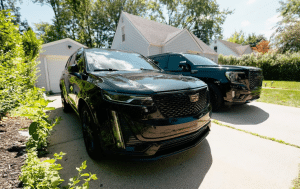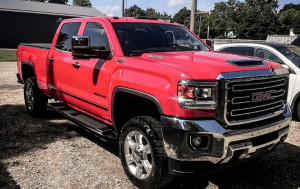

If you’ve ever wondered what is car detailing and whether it’s really worth your time and money, you’re not alone. Most car owners are familiar with a basic wash — but detailing is an entirely different level of care. It’s a thorough, multi-step process that cleans, restores, and protects your vehicle inside and out. Whether you’ve just bought a new car or you’re trying to preserve an older one, understanding what car detailing includes can help you make smarter decisions about maintaining your vehicle’s condition and value.
What Is Car Detailing, Really?
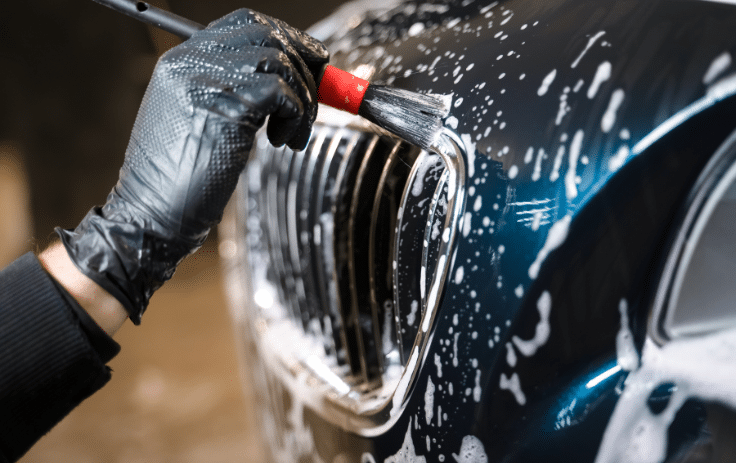
At its core, car detailing is a thorough, technical process focused on cleaning, restoring, and protecting all vehicle surfaces — inside and out. It goes far beyond a standard wash by targeting dirt, stains, and buildup that regular cleaning simply misses.
According to Chemical Guys, a well-respected name in the car care and products space: “Every surface, from paint to plastic to upholstery, is treated with products and techniques explicitly made for that material. Detailing often includes steps like claying to remove bonded contaminants, polishing to correct imperfections in the paint, and applying protective layers such as wax, sealant, or coatings.”
The distinction between a car wash and car detailing comes down to depth and intent. A car wash is designed for speed — removing surface-level dust and grime. Detailing, by contrast, is about preservation and restoration. As Auto Care HQ explains, even brand-new cars benefit from detailing because transport and improper dealership washing can introduce iron contaminants, fine scratches, and swirl marks before you’ve even driven off the lot.
The Two Main Types of Car Detailing
Car detailing is typically divided into two major categories: exterior detailing and interior detailing. Both are equally important and together constitute a complete detail.
Exterior Detailing
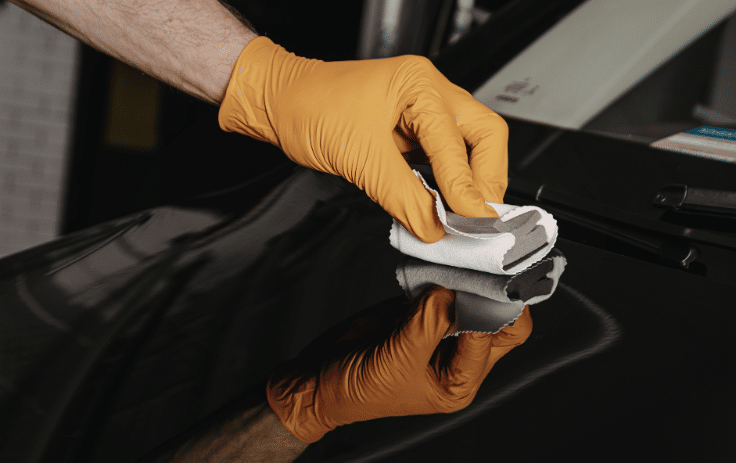
Exterior detailing focuses on restoring and protecting the outside surfaces of your vehicle. A full exterior detail typically includes the following steps:
1. Hand Wash A thorough hand wash using pH-balanced soap removes loose dirt and road grime from the paint, wheels, tires, and glass. Many detailers use the two-bucket method — one bucket for clean soapy water and one for rinsing the wash mitt — to prevent dragging contaminants back across the paint.
2. Clay Bar Treatment Even after a good wash, the paint can still feel rough to the touch due to bonded contaminants like brake dust, industrial fallout, and road tar. A clay bar is dragged across a lubricated surface to lift these embedded particles, leaving the paint feeling smooth as glass. This step is critical before any polishing or wax application because contaminants can clog polishing pads and cause further damage if not removed first.
3. Paint Correction / Polishing Over time, paintwork develops swirl marks, fine scratches, and oxidation from improper washing, UV exposure, and environmental wear. Paint correction uses machine polishers with varying grades of compound or polish to level the clear coat and eliminate these defects, restoring depth and gloss.
4. Paint Protection Once the paint is clean and corrected, a protective layer is applied. This can be:
- Carnauba wax — a natural, traditional option that adds a warm glow; typically lasts 1–3 months
- Paint sealant — a synthetic polymer option offering stronger protection for 3–6 months
- Ceramic coating — a liquid polymer that chemically bonds with the paint, creating a hydrophobic, durable shield that can last several years with proper maintenance
5. Tire and Wheel Care Wheels are often the dirtiest part of a vehicle, collecting heavy brake dust and road grime. Detailing includes decontaminating and cleaning the wheels, then applying a dressing to tires for a clean, finished look.
6. Glass Cleaning All windows and mirrors are cleaned with streak-free glass cleaners, and some detailers also apply a glass sealant to help water bead off during rain, improving visibility.
Interior Detailing
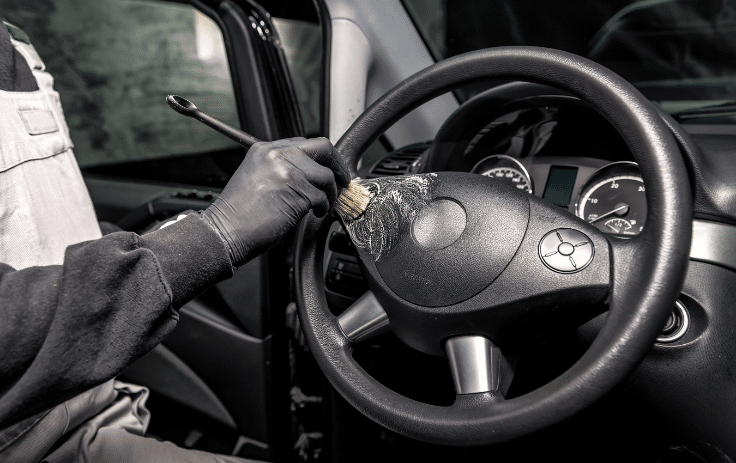
Interior detailing is a deep clean of every surface inside the cabin — the areas passengers actually touch, breathe, and sit on every day.
Vacuuming comes first, covering seats, carpets, floor mats, and every crevice. This is followed by steam cleaning or shampooing of upholstery and carpets to lift embedded stains and odors.
Leather surfaces receive dedicated conditioning treatment to prevent cracking and drying. Plastics, vinyl, and rubber trim are cleaned and dressed to restore a factory appearance.
Air vents, cup holders, door pockets, and seatbelt mechanisms are addressed by hand. Finally, interior glass is cleaned to eliminate fog and haze from the inside.
Car Detailing vs. Car Washing: Key Differences
| Car Wash | Car Detailing | |
|---|---|---|
| Purpose | Remove surface dirt | Clean, restore, and protect |
| Time | 10–30 minutes | 2–8+ hours |
| Scope | Exterior only (mostly) | Full interior and exterior |
| Tools Used | Automated or basic manual | Specialized products per surface |
| Paint Treatment | None | Clay bar, polish, protection |
| Result | Clean car | Restored and protected car |
Why Car Detailing Matters: Real Benefits
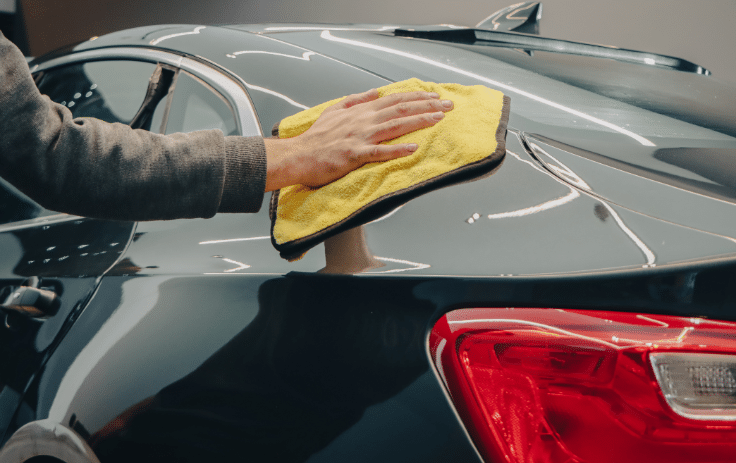
Beyond the obvious visual improvement, regular detailing delivers tangible, long-term benefits for your vehicle.
1. Protects Your Paint from Permanent Damage
UV rays, acid rain, bird droppings, tree sap, and road salt are constantly attacking your car’s paint. Left untreated, these contaminants can etch through the clear coat and cause oxidation or rust. A proper detailing routine — especially when combined with ceramic coating or sealant — creates a barrier between the paint and these environmental threats.
2. Increases Resale Value
A well-maintained car commands a higher price. As GoodCar.com notes, “A detailed automobile looks well-maintained, and buyers are often willing to pay more for a car that appears to be meticulously taken care of.” Research from Car Detox suggests regular detailing can increase resale value by over 15%.
3. Improves Safety
Proper cleaning of windows, mirrors, and headlights directly improves road visibility. Dirty or oxidized headlight lenses, for example, can significantly reduce light output at night — a safety hazard many drivers overlook.
4. Creates a Healthier Interior
Over time, your car’s interior accumulates dust, allergens, bacteria, pet dander, and food particles. Interior detailing removes these buildup sources, creating a cleaner, healthier environment, particularly important for passengers with allergies or respiratory sensitivities.
5. Extends the Life of Interior Materials
Leather cracking, carpet staining, and dashboard fading are all accelerated by neglect. Regular conditioning and cleaning preserve these materials, preventing premature wear and costly replacements.
How Often Should You Detail Your Car?
There’s no single universal answer, but most automotive experts converge around a clear baseline. The right schedule depends on your driving habits, climate, and how your car is stored — all factors we break down in our dedicated guide on how often you should detail your car. According to Cilajet, “as a rule of thumb, you should detail your car, or have it detailed by a professional, every 4 to 6 months — roughly the same frequency as a standard oil change.”
Ceramic Pro refines this further based on usage:
- Every 3–4 months if your car faces harsh conditions, heavy daily driving, or exposure to coastal salt air
- Every 6 months if your car is primarily garaged or lightly used
- Once a year for vehicles that are rarely driven or kept in controlled storage
Your specific situation matters. If you have children, pets, or commute long distances, the interior may need attention more frequently. If you live in a region with intense sun or winter road salt, exterior protection becomes a higher priority.
DIY Detailing vs. Professional Detailing

Many car owners choose to detail their own vehicles, and it’s entirely achievable with the right products and patience. DIY detailing is cost-effective and gives you full control over what goes on your car. Basic hand washing, interior vacuuming, and wax application are all manageable at home.
However, professional detailers bring specialized equipment — dual-action polishers, steam machines, paint thickness gauges, and high-intensity lighting — that allows them to identify and correct issues that are nearly impossible to address without experience. Paint correction, in particular, carries real risk of damage if done incorrectly, as removing too much clear coat permanently weakens the finish.
If you’re weighing your options, it helps to understand how much car detailing costs so you can budget accordingly and decide which services are worth outsourcing versus tackling yourself.
A practical approach for most car owners: perform light maintenance washes every 2–4 weeks at home, and schedule a full professional detail every 4–6 months.
Common Car Detailing Products You Should Know
If you decide to detail your own car, knowing the right products makes a significant difference. Here are the categories to understand:
- pH-neutral car soap — safe for paint sealants and coatings; avoids stripping protective layers
- Iron decontamination spray — dissolves bonded metallic particles before clay bar use
- Clay bar or clay mitt — removes surface contamination that washing leaves behind
- Machine polish / compound — corrects paint defects; choose the least aggressive product that achieves your goal
- Carnauba wax or synthetic sealant — your baseline paint protection
- Ceramic coating — for long-term protection; best applied professionally or with significant product knowledge
- Microfiber towels — essential for all surfaces; avoid terry cloth or paper towels, which leave scratches
Final Thoughts
Car detailing is one of the most impactful forms of vehicle maintenance that doesn’t involve the engine. It protects your investment, keeps your car looking and feeling its best, and preserves the materials that regular washing simply can’t reach. Whether you approach it as a DIY weekend project or hand it off to a professional every few months, building a consistent detailing routine pays off in both appearance and long-term vehicle value.
If you’re just getting started, the best first step is a thorough hand wash followed by a clay bar treatment and a quality wax or sealant. From there, you’ll quickly develop an eye for what your specific car needs — and you’ll notice the difference every time you get in.
Ready to Give Your Vehicle the Care It Deserves?
Whether your car needs a deep interior cleaning, exterior detailing, paint protection, or a complete detail, Chariot Detailing brings professional mobile detailing directly to your home or workplace throughout Lansing, East Lansing, Haslett, Okemos, and nearby Mid-Michigan communities.
Call (517) 816-5126 today to schedule your mobile detailing service and see the difference a professional detail can make for your vehicle.