

If you’ve ever wondered how often should you detail your car, you’re not alone — it’s one of the most common questions among car owners who want to protect their investment without overdoing it.
The honest answer isn’t a single number. It depends on where you live, how you drive, and how your car is stored. This guide cuts through the noise and gives you the real, research-backed information you need to build a detailing schedule that actually makes sense for your situation.
What Is Car Detailing, Exactly?
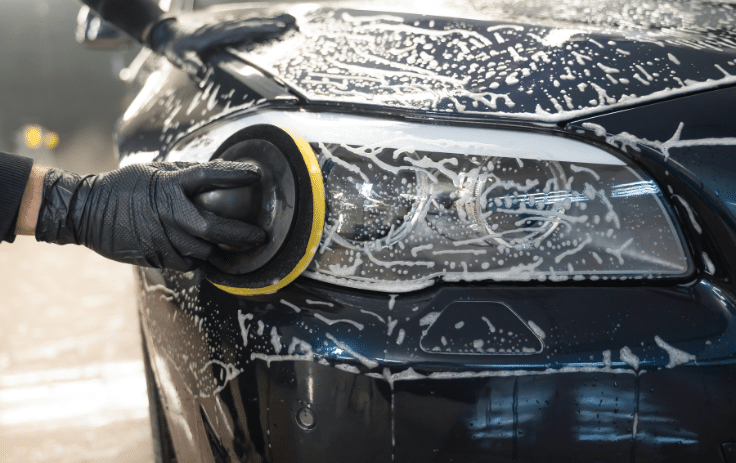
Before talking frequency, it helps to understand what detailing actually is — because it’s not the same as a standard car wash.
Car detailing is a comprehensive cleaning, restoration, and protection process covering both the interior and exterior of your vehicle. On the outside, this typically includes a thorough hand wash, clay bar decontamination, paint polishing, waxing or sealant application, and wheel and tire treatment. On the inside, it involves deep vacuuming, carpet and upholstery shampooing, leather conditioning, and cleaning every surface from the dashboard to the door jambs.
A detail restores and protects — it doesn’t just clean. That distinction is what makes the frequency question matter.
How Often Should You Detail Your Car? The Baseline Answer
For most drivers, the standard recommendation from industry professionals is every 4 to 6 months, or roughly twice a year. This interval balances the cost and time involved against meaningful protection for your vehicle’s surfaces.
Think of it the same way you think about oil changes: routine, scheduled, and worth doing before problems develop rather than after.
That said, twice a year is a starting point, not a rule. A handful of real-world factors will push that number up or down considerably.
Key Factors That Determine How Often You Should Detail Your Car

1. Where You Park
Outdoor parking is the single biggest accelerator of paint and surface degradation. Vehicles left outside face bird droppings, tree sap, pollen, UV radiation, and airborne pollutants on a daily basis. Each of these can etch into a car’s clear coat surprisingly fast if left untreated.
- Outdoor parking: Aim for detailing every 3 to 4 months
- Garage or covered parking: Every 4 to 6 months is usually adequate
2. Climate and Environmental Conditions
Where you live shapes your detailing schedule more than almost anything else.
Winter and road salt exposure are a serious concern. According to AAA’s research on road de-icers, Americans spend approximately $3 billion annually on vehicle repairs caused by rust damage from de-icing salts and chemicals.
AAA’s automotive engineers note that road salt damage goes well beyond cosmetics — it can corrode brake lines, suspension components, and structural parts. For drivers in winter climates, a thorough detail (or at minimum a deep wash with undercarriage attention) after winter is not optional — it’s protective maintenance.
UV and heat damage are equally serious in warmer regions. Research cited in the International Journal of Advanced Research in Science, Engineering and Technology found that UV radiation can decrease a car’s paint life expectancy by up to 50%. Sun exposure also degrades interior plastics, leather, and vinyl — dashboards crack, leather stiffens, and upholstery fades. Once this damage sets in, it is difficult to reverse.
General climate-based guidelines:
- Coastal or humid climates (salt air, moisture): Every 3 to 4 months
- Hot, sunny climates (intense UV): Every 3 to 4 months, with UV-protective products applied
- Cold, snowy climates (road salt): At minimum, a full detail in spring after salt season and before winter begins
- Mild, temperate climates: Every 5 to 6 months is typically sufficient
3. How You Use Your Vehicle
Daily drivers accumulate grime, interior wear, and paint contamination much faster than lightly used vehicles.
- Daily commuter in urban or suburban areas: Every 3 to 4 months
- Off-road or heavy-duty use: Consider monthly to every 2 months
- Weekend/occasional driver, garage-kept: Once or twice per year may be sufficient
- Vehicles regularly carrying pets, children, or food: Interior detailing every 2 to 3 months is wise
4. Whether You Have Paint Protection Applied
Ceramic coatings, paint protection film (PPF), and quality wax sealants meaningfully extend the time between full details. A ceramic coating, properly maintained, can provide years of additional protection and may allow you to stretch exterior detailing intervals significantly. If you’ve invested in this type of protection, follow the manufacturer’s maintenance schedule — typically a maintenance wash every 4 to 8 weeks and a professional detail once or twice a year.
Exterior vs. Interior: Different Schedules for Different Needs
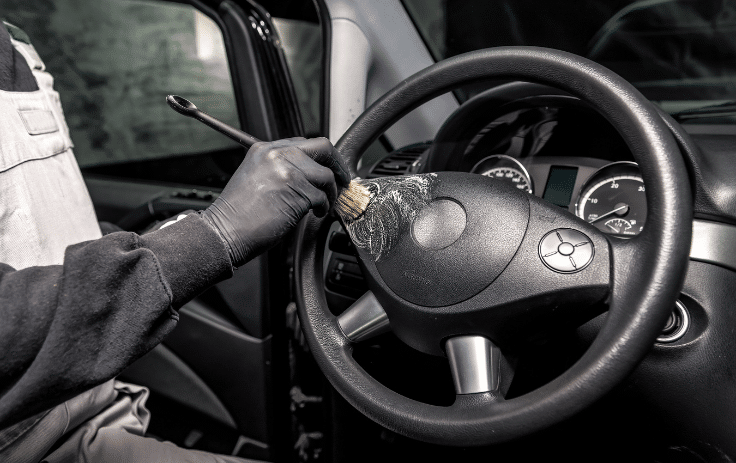
Exterior and interior surfaces age differently, and it can make sense to treat them on separate schedules.
Exterior detailing needs to keep pace with environmental exposure. Paint, wheels, glass, and trim are constantly bombarded by contaminants. A good rule: exterior detailing every 3 to 6 months, adjusted for your climate.
Interior detailing is more about usage than environment. For daily drivers, interior detailing every 3 to 4 months keeps surfaces from deteriorating. For lightly used vehicles, an annual interior detail may be enough.
The key interior indicators to watch are odors, staining, and the condition of leather or vinyl surfaces — conditioning these materials regularly prevents irreversible cracking and drying.
A Practical Seasonal Detailing Schedule
For drivers in regions with four distinct seasons, a seasonal approach works well:
| Season | What to Do |
|---|---|
| Spring | Full detail to remove winter salt, road grime, and undercarriage buildup. Apply a fresh sealant or wax. |
| Summer | Quick exterior maintenance detail mid-season; apply UV-protective products to interior surfaces. |
| Fall | Full detail before winter; apply protective wax or sealant to paint and undercarriage coating if available. |
| Winter | Wash frequently (every 2 weeks per AAA’s recommendation), especially after heavy salt exposure. |
Signs Your Car Needs a Detail Now — Regardless of Schedule
You don’t always need to wait for your scheduled interval. These are clear signals it’s time for a detail:
- Paint looks dull or hazy — oxidation is beginning
- Water no longer beads on the paint — protective wax or sealant has worn off
- Visible water spots or paint etching — contaminants have started to bond to the clear coat
- Interior odors that don’t go away with airing out — trapped bacteria or mold in carpet and upholstery
- Leather feels dry or shows early cracking — conditioning is overdue
- After a long road trip — especially if you’ve driven through bugs, rain, or dirty conditions
Why Regular Detailing Is Worth the Investment
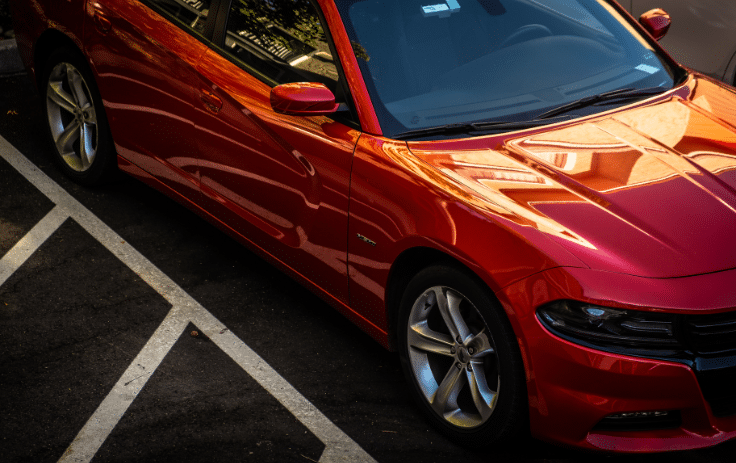
Beyond aesthetics, consistent detailing is one of the most cost-effective forms of preventive vehicle maintenance.
From a resale standpoint, the numbers are compelling. Research comparing vehicles in “Good” versus “Excellent” condition — using Kelley Blue Book valuation methodology — found that trade-in values increase by approximately 10% for well-maintained vehicles, with private sale prices rising by around 9%. For a $20,000 vehicle, that gap can represent $1,800 to $2,000 in additional value from presentation alone.
Regular detailing also catches small problems early. A thorough cleaning process often reveals paint chips, minor rust spots, cracked trim, or early signs of upholstery wear that are inexpensive to address when caught early and costly to fix once they’ve progressed.
Quick-Reference Detailing Frequency Guide
| Situation | Recommended Frequency |
|---|---|
| Average daily driver, outdoor parking | Every 3 to 4 months |
| Daily driver, garaged | Every 4 to 6 months |
| Winter climate with road salt | Spring and fall minimum; wash every 2 weeks in winter |
| Hot/sunny climate with intense UV | Every 3 to 4 months |
| Light/occasional use, garaged | 1 to 2 times per year |
| Off-road or heavy-duty use | Monthly to every 2 months |
| Vehicle with ceramic coating | Per coating manufacturer guidance; typically 1 to 2 full details per year |
How Often Should You Detail Your Car in Mid-Michigan?

If you’re a driver in the Lansing area, Mid-Michigan presents a specific set of challenges that put your vehicle through more than the national average would suggest.
Mid-Michigan winters are long and heavily salted. Lansing and the surrounding communities — East Lansing, Okemos, Haslett, and beyond — see months of road salt, freeze-thaw cycles, and slushy buildup that accumulate in wheel wells and under the chassis.
As covered earlier, AAA has repeatedly flagged this kind of exposure as one of the leading causes of structural rust damage, with repair costs ranging from hundreds to thousands of dollars depending on severity. For Mid-Michigan drivers, a thorough post-winter detail in early spring isn’t optional — it’s one of the smartest maintenance decisions you can make.
Spring and summer bring their own pressures. Pollen season in Michigan is significant, and pollen left on paint surfaces can become mildly acidic as it breaks down, etching into the clear coat over time. Summer UV exposure and heat accelerate interior fading and dashboard cracking, particularly in vehicles that park outdoors.
A practical Mid-Michigan detailing schedule looks like this:
- Early spring (March–April): Full detail to neutralize winter salt, clean the undercarriage, and refresh paint protection after a hard winter
- Mid-summer (June–July): Exterior maintenance detail; apply UV protection to interior plastics and leather
- Fall (October): Full detail before winter salt season begins; apply a fresh wax or sealant coat to protect paint through the cold months
That’s three details per year as a reasonable baseline for most Mid-Michigan drivers — slightly more frequent than the national average, and for good reason.
If finding time to get your car to a shop is the obstacle, Chariot Detailing offers fully mobile car detailing throughout Lansing and the Greater Lansing area, bringing professional interior and exterior detailing directly to your home, apartment, or workplace.
For drivers navigating busy schedules across Mid-Michigan, that kind of convenience makes it easier to actually stick to a regular detailing routine — which is ultimately what protects your vehicle most.
The Bottom Line
How often you should detail your car comes down to your specific combination of driving habits, climate, parking situation, and whether your vehicle has protective coatings applied. For most people, two to four times per year is the practical sweet spot. If you live somewhere with hard winters or park outside year-round, lean toward four times. If your car spends most of its life in a garage and sees light use, twice a year will serve you well.
The worst detailing schedule is no schedule at all. Surface damage compounds over time — UV oxidation, salt corrosion, and contaminant etching are all gradual processes that become expensive once they’re established. Regular detailing keeps those forces at bay and protects what is, for most people, one of their largest financial assets.
Ready to Stay Ahead of Dirt, Salt, and Wear?
A regular detailing schedule helps protect your paint, interior surfaces, and overall vehicle condition throughout the year.
Whether your car needs a seasonal detail, interior deep cleaning, or exterior protection, Chariot Detailing provides professional mobile detailing services throughout Lansing, East Lansing, Haslett, Okemos, and surrounding Mid-Michigan communities.
Call (517) 816-5126 today to schedule your next detail and keep your vehicle looking its best year-round.