
If your carpets, seats, and dashboard have seen better days, you’ve probably typed “what does interior detailing include” into Google to figure out if it’s worth the money. The short answer: a lot more than the vacuum-and-wipe-down you’d get from a quick car wash.
In this guide, we’ll walk through exactly what’s included in a professional interior detail, how the process works, what it costs, how long it takes, and when it actually makes sense to book one.
What Does Interior Detailing Include?
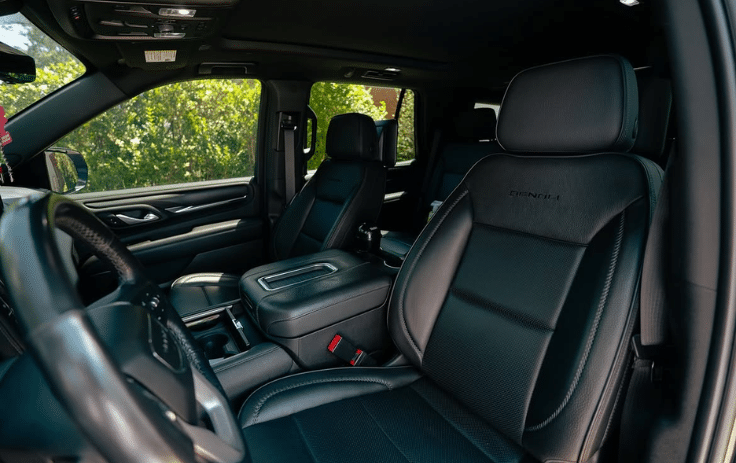
A professional interior detail covers every surface inside the cabin, not just the spots you can reach with a handheld vacuum. At minimum, a proper interior detail includes:
- Deep vacuuming of carpets, seats, trunk, and door jambs
- Shampooing or steam extraction of carpet and cloth upholstery
- Leather and vinyl cleaning and conditioning
- Wipe-down of the dashboard, console, and interior plastic or trim
- Interior glass, mirrors, and touchscreen cleaning
- Floor mat cleaning and detailing
- Odor treatment
Higher-tier packages usually add stain extraction, plastic and trim protectant, and full door jamb detailing on top of the basics.
If you want the full breakdown of what separates a basic clean from a true interior detail, we cover that in more depth in our interior detailing explainer. You can also see exactly what’s included at each tier on our interior detailing service page.
The Interior Detailing Process, Step by Step
Every detailer has their own routine, but a thorough interior detail generally follows this order.
1. Deep Vacuum and Debris Removal
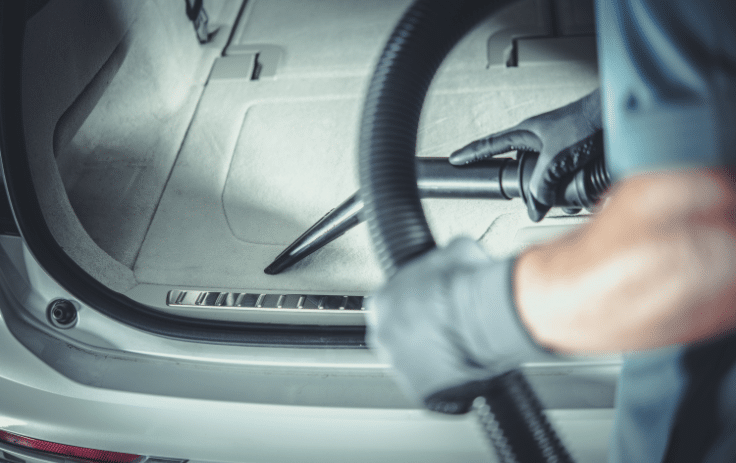
The first pass removes crumbs, dirt, and pet hair from carpets, seats, and crevices. A good vacuum routine uses different attachments for different jobs — a short-bristle tool to agitate dirt out of fabric, and a crevice tool to get into seams and corners.
Floor mats come out and get vacuumed separately, since dirt tends to settle under the surface fibers.
2. Shampooing and Stain Extraction
This is the step that separates detailing from a regular cleaning. Carpet and cloth seats get shampooed or steam-extracted to pull out dirt and stains that vacuuming alone can’t reach.
One important caution here: seats should never be soaked. Consumer Reports notes that oversaturating cushions can trap moisture and lead to mold or a musty smell — a good reason to leave this step to someone with the right equipment and drying process.
3. Leather and Vinyl Cleaning and Conditioning
Leather and vinyl are treated with a protective coating, so they need gentler care than fabric. Automotive-specific cleaners followed by a proper leather conditioner keep the material from drying out or cracking over time.
Household cleaners, bleach, or anything containing hydrogen peroxide should stay far away from leather — they can strip the finish and shorten its life.
4. Dashboard, Console, and Trim Detailing
Dashboards, vents, buttons, and cup holders collect dust and grime that’s easy to miss with a basic wipe-down. Detailers typically use soft brushes and microfiber cloths here rather than paper towels, which can leave lint behind.
A good detail also skips the glossy “wet look” dressings that can create windshield glare while driving.
5. Glass, Mirrors, and Touchscreens
Interior glass gets cleaned with an automotive glass cleaner rather than household window spray, which can leave a film. Touchscreens need their own approach too — isopropyl alcohol on a microfiber cloth is safer than ammonia-based cleaners, which can damage a screen’s anti-glare coating.
6. Door Jambs, Trunk, and Floor Mats
Door jambs and the trunk are two areas people almost never clean on their own, but they collect just as much grime as the cabin. A full detail wipes these down and vacuums or shampoos the trunk area along with the mats.
7. Odor Treatment
The last step addresses lingering smells from spills, pets, or smoke — often with an odor-neutralizing treatment rather than a scent that just masks the problem temporarily.
How Long Does Interior Detailing Take?
Timing depends on the vehicle’s size and how much buildup there is to work through. As a general rule, an interior-only detail takes somewhere in the range of 1.5 to 3.5 hours, while a full interior-and-exterior detail runs closer to 2 to 5 hours.
Heavily soiled interiors — think ground-in pet hair, spilled drinks, or months of fast-food wrappers — take longer than a car that just needs routine maintenance.
How Much Does Interior Detailing Cost?
Pricing depends on a few factors: the size of the vehicle, how dirty the interior is, and which package level you choose. A quick maintenance clean costs less than a full deep clean with shampooing, conditioning, and stain extraction.
We’ve broken down exactly what drives pricing up or down in our interior detailing cost guide. You can also compare packages directly on our detailing services page.
Benefits of Interior Detailing
A cleaner, healthier cabin. You touch the same surfaces every drive — steering wheel, door handles, shift lever, armrests. Consumer Reports points to CDC guidance on regularly cleaning frequently touched surfaces to help cut down on the bacteria and grime that build up there over time.
Better resale or trade-in value. Kelley Blue Book’s own guidance on selling a car notes that a thoroughly cleaned, professionally detailed interior reassures buyers they’re getting a well-cared-for vehicle. A stained, worn-looking interior is one of the fastest ways to make a buyer question the car’s history.
Materials that last longer. Conditioning leather and vinyl, protecting plastic trim, and properly extracting (rather than scrubbing) stains all help interior surfaces hold up better over the years.
A more pleasant daily drive. This one’s simple — a clean, fresh-smelling interior just makes commuting, road trips, and carpools more enjoyable.
Interior Detailing vs. a Regular Car Wash or DIY Cleaning
A car wash — even one that includes an interior vacuum — typically stops at the surface. Interior detailing goes several steps further:
| Basic Wash / DIY Vacuum | Professional Interior Detailing | |
|---|---|---|
| Vacuuming | Surface-level only | Deep vacuum including crevices and trunk |
| Carpets & seats | Not shampooed | Shampooed or steam-extracted |
| Leather & vinyl | Wiped, if at all | Cleaned and conditioned |
| Stains | Usually left in place | Targeted extraction |
| Door jambs & trunk | Skipped | Cleaned as part of the service |
| Odors | Masked with air fresheners | Treated at the source |
DIY cleaning can help maintain a car between details, but it’s easy to reach for the wrong product. Consumer Reports specifically warns against household cleaners on leather, ammonia-based sprays on touchscreens, and paper towels on interior surfaces — all common mistakes that can cause damage a basic wipe-down was supposed to prevent.
How Often Should You Get Interior Detailing?
There’s no single answer that fits every driver, but a few patterns hold up well:
- Every 3 to 6 months for most daily drivers, to stay ahead of buildup
- More often if you have kids, pets, or a long commute
- Before winter and after winter, especially in Michigan, where road salt and slush get tracked in constantly
- Before selling or trading in, so the car shows well and holds its value
- Seasonally, to deal with pollen, dust, and the general grime that builds up across a Michigan year
When Should You Book a Professional Interior Detail?
A few situations make professional detailing worth prioritizing over a DIY clean:
- You’re preparing to sell or trade in your vehicle
- You just dealt with a spill, pet accident, or muddy road trip
- Allergy season has you noticing more dust and pollen inside the cabin
- The car hasn’t had a deep clean in six months or longer
- You bought a used vehicle and want to reset the interior before it becomes “yours”
Frequently Asked Questions
Does interior detailing remove pet hair and stains? Yes. Deep vacuuming handles embedded pet hair, and shampooing or steam extraction targets stains that a regular vacuum leaves behind.
Will detailing get rid of smells like smoke or mildew? A proper interior detail addresses odors at the source through cleaning, extraction, and odor treatment, rather than just covering the smell with a spray.
Is interior detailing worth it for an older car? Often, yes. A clean, well-maintained interior helps an older vehicle feel — and show — better, whether you’re keeping it or getting ready to sell.
The Bottom Line
Interior detailing isn’t just a fancier vacuum job — it’s a full cleaning and conditioning process covering carpets, upholstery, leather, trim, glass, and every crevice in between. Done right, it protects your investment, keeps the cabin healthier, and makes every drive a little more pleasant.
If your interior is overdue for a deeper clean, Chariot Detailing is ready to help. Explore our interior detailing packages or browse our full lineup of detailing services to find the right option for your vehicle.
You can also book your appointment online or call or text us at (517) 816-5126 to get started.